

Southern Ground Hornbills are one of the bush’s most charismatic birds and one of its slowest to breed. So when a group goes more than a decade without raising a chick, it’s a sign that something is missing. For the group here in the Timbavati around RockFig that missing piece has been a simple but vital one: a safe, suitable place to nest. The latest donation from the owners of RockFig Safari Lodge, Bruce & Glen, enabled the build of the nest.
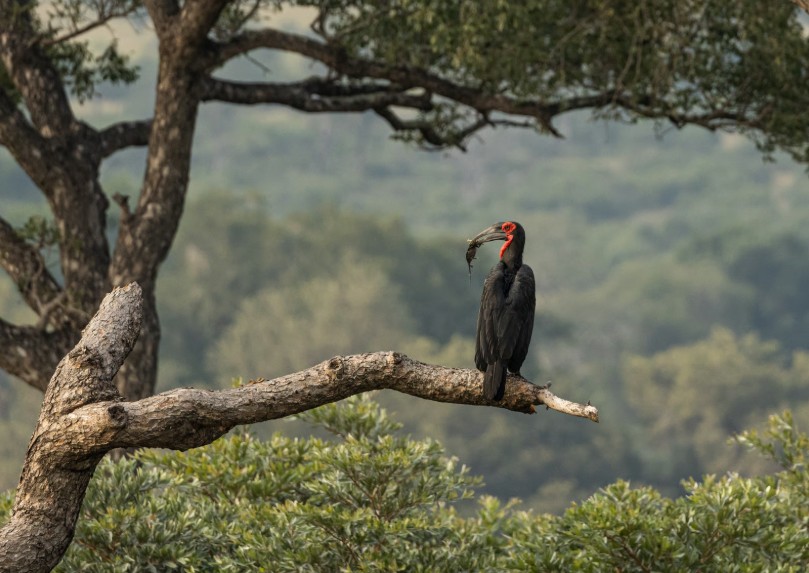
Why their current nest is not suitable for breeding:
The pair’s natural nesting cavity is around over 20+ years old, and over time it has become too deep to be usable. It also sits too close to the road, where passing traffic is a constant disturbance, and our camera traps have picked up leopards moving through the area more than once. Not the safe, quiet corner a breeding pair needs.
Choosing the perfect tree:
Finding the right tree is harder than it sounds. It needs to be a large, tough hardwood and the kind elephants won’t ring bark or push over, as well as a shady canopy to shield the nest from the heat of the day.
A box built for the heat:
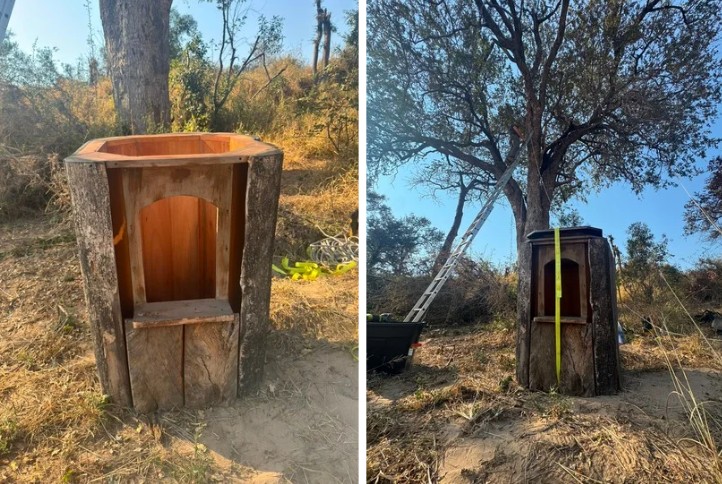
The nest box itself is purpose-built. A thick inner layer of wood for insulation, wrapped in an outer barrier layer. Together they lower the temperatures inside the nest, giving any future chicks the very best chance of survival through the hottest months.
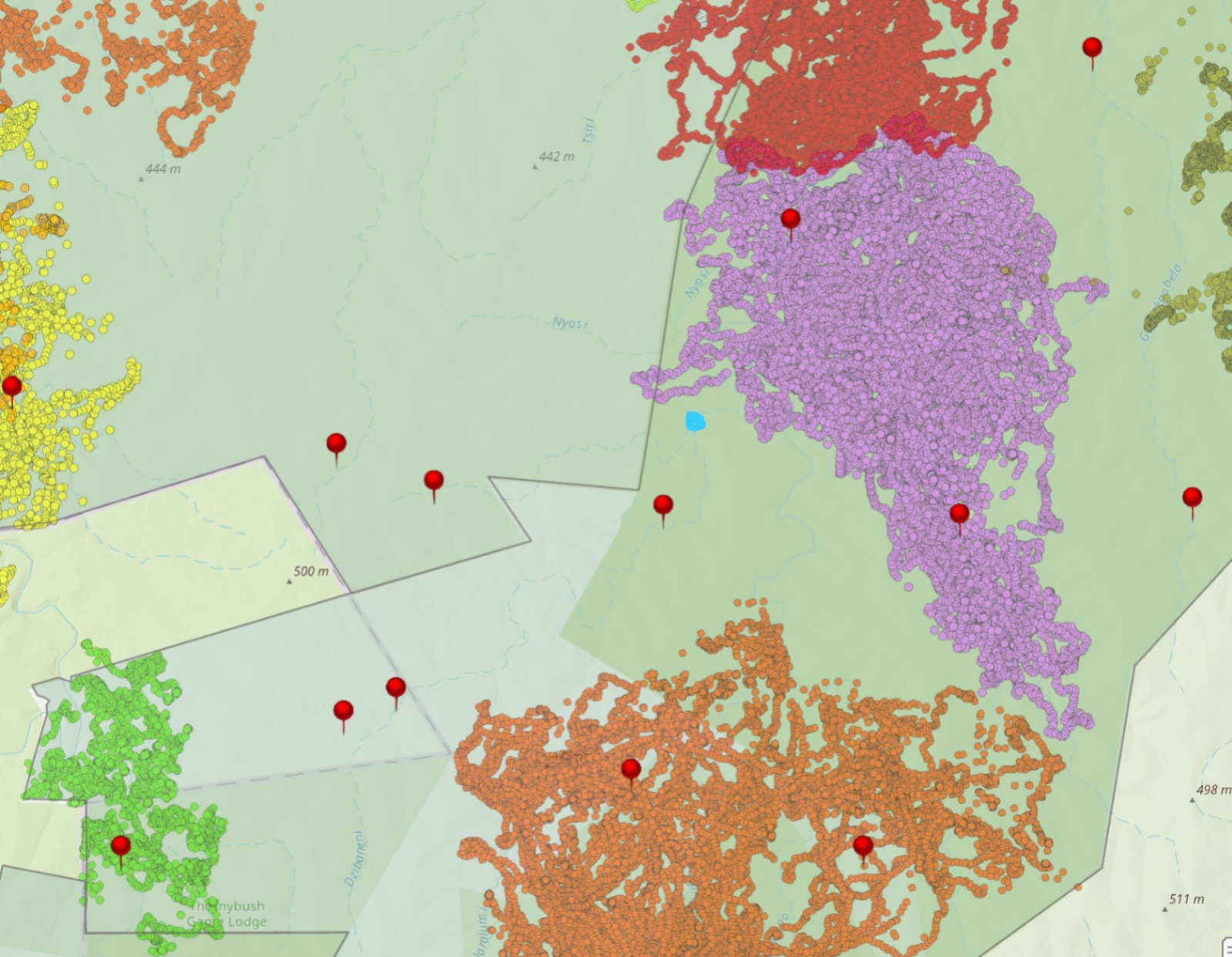
On the map below, the coloured patches show the territories of the tagged birds, and the blue dot marks the brand-new nest. The APNR Ground Hornbill Project has positioned this nest carefully, slotting it in between neighbouring groups rather than pushing too far north.
Now, we wait…
New nests go up in Winter, giving the birds plenty of time to discover and inspect them before the breeding season begins during the Summer months. It can take a season or two, sometimes several years, for a pair to finally move in, so patience is everything.
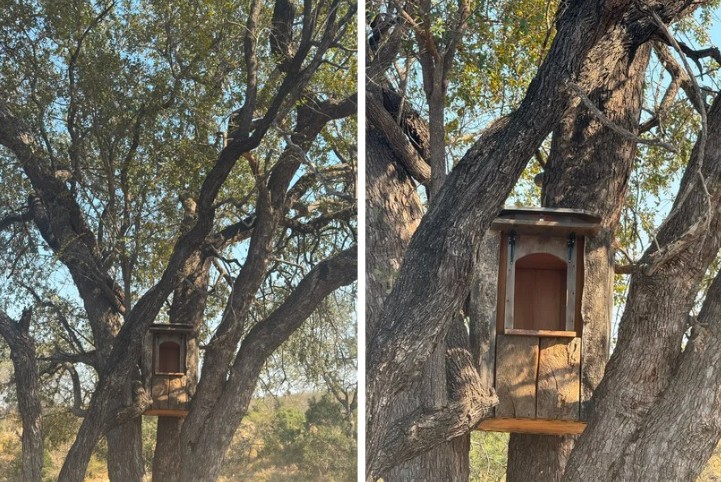
Many thanks to Kyle and Carrie from the APNR Ground Hornbill Project, whose hard work and dedication have made this happen. We’ve done everything we can to give these remarkable birds the best possible opportunity, now it’s over to them.
For more information about APNR Ground Hornbill Project, you can visit their website https://www.apnrgroundhornbillproject.com/